

HOW WE WORK
A clear path from first ideas to completion.
Every successful project is built on hundreds of decisions.
Our role is to make those decisions easier to navigate, bringing together your brief, site, budget, design priorities, consultants and regulatory requirements through a clear architectural process.
Whether we're designing a new home, transforming an existing building or exploring the potential of a development site, we guide the project from early feasibility through design, documentation and construction.

WORKING WITH UFA
You don't need to know how to navigate an architectural process before you begin.
Architecture is collaborative. Our role is to guide the process, explain what needs to happen and bring together the right information and expertise at the right time.
You bring an understanding of what you want to achieve. We help turn that into a clear brief, test it against the realities of the site, and progressively develop the project with you.
What you can expect from us
Clear guidance and honest advice
Thoughtful design and problem-solving
Coordination of the project team
Clear next steps and approval points
What we need from you
Your goals, priorities and budget
Open and consolidated feedback
Decisions at agreed stages
Communication when circumstances change
THE ARCHITECTURAL PATHWAY
Four stages. One clear journey.
Our four-stage process provides a clear framework from early feasibility through to completion. At each stage we define what needs to happen, the decisions required from you, and what needs to be resolved before moving forward.
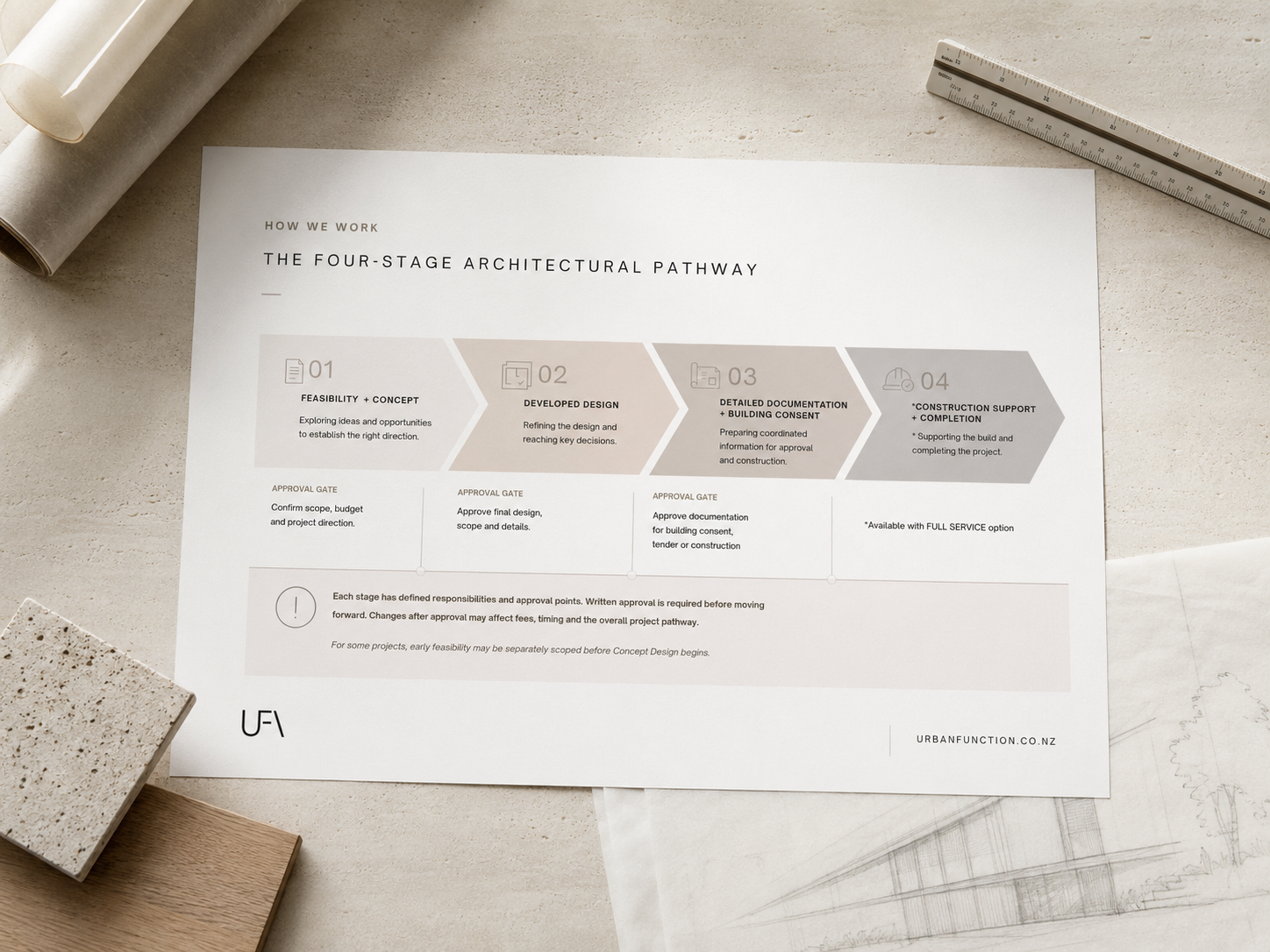
THE PROCESS IN MORE DETAIL
What happens at each stage
Our architectural process provides a clear pathway from early site feasibility and concept design through to building consent and construction. Each stage has a defined purpose, clear decisions and an agreed point before moving forward.
-
We begin with your brief, site, budget and priorities, then test what is possible and develop the strongest architectural direction.
For residential, multi-unit and development projects, this can include site feasibility, planning considerations, orientation, access and development potential.
Your role: Share what matters to you, review the options and give clear, consolidated feedback.
Next: Once the preferred concept and project direction are agreed, we move into Developed Design.
-
We refine the preferred concept into a more resolved architectural design, developing the layout, form, materials, functionality and key technical requirements.
Relevant consultants are brought into the process where required so important decisions can be coordinated before detailed documentation begins.
Your role: Review the developing design and confirm the key project decisions.
Next: Once the design is resolved and approved, we move into Detailed Documentation.
-
We translate the approved design into coordinated architectural documentation for building consent and, depending on the agreed scope, pricing and construction.
This stage brings together the technical information required to move the project confidently toward the build.
Your role: Confirm remaining decisions and approve the documentation before it is submitted or issued.
Next: Once consent and the required documentation are in place, the project can progress toward construction.
-
Where included in your architectural services, Urbanfunction remains involved during construction to clarify documentation, respond to design questions and help protect the approved design intent.
The level of construction support is tailored to the requirements of each project.
Your role: Make timely decisions and approve any changes that arise during the build.
Next: We support the project through the agreed construction stages and toward completion.
Want the complete picture?
Our Process Guide explains the Urbanfunction architectural process in more detail, including each stage, client responsibilities, approval points and what to expect as your project progresses.
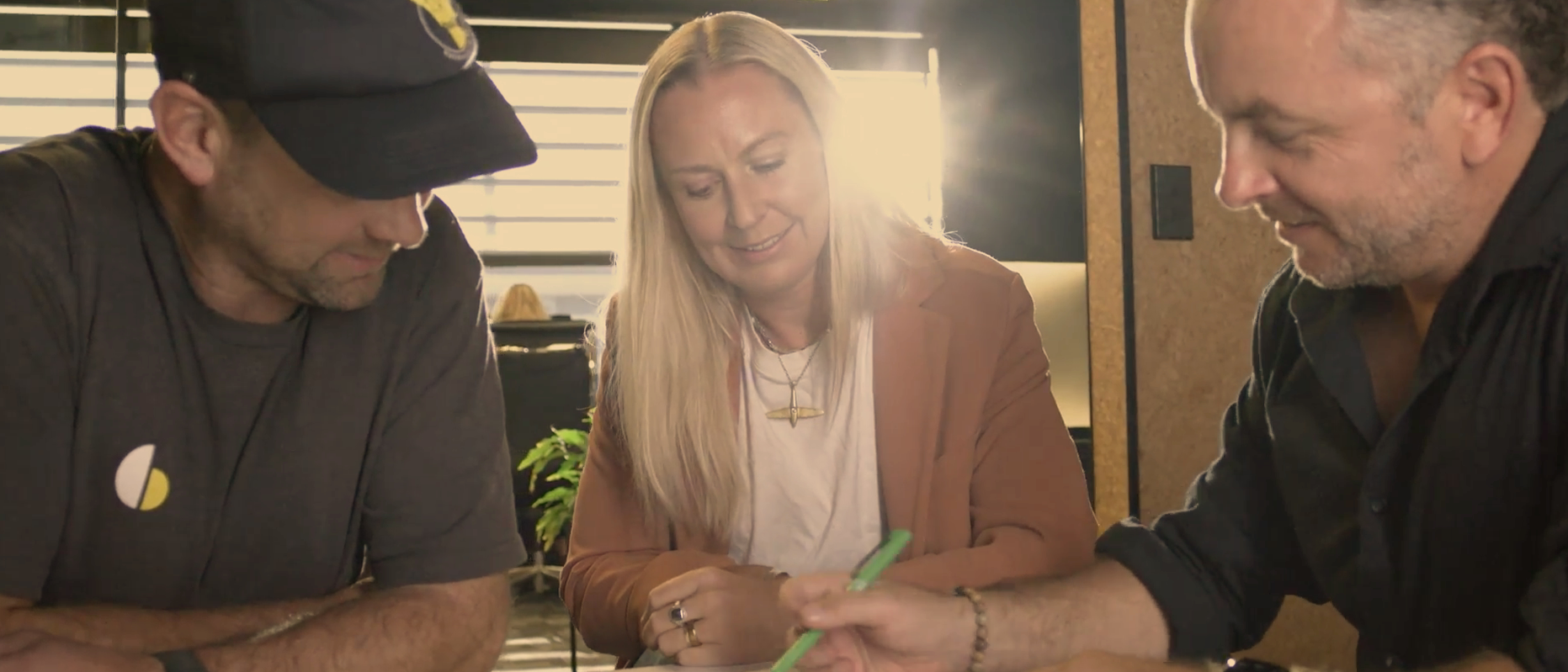
Before design begins, we get clear on the project.
You don’t need to arrive with everything resolved. These first steps help us understand your brief, site, budget and priorities, identify what information is needed, and confirm the right architectural pathway before design begins.